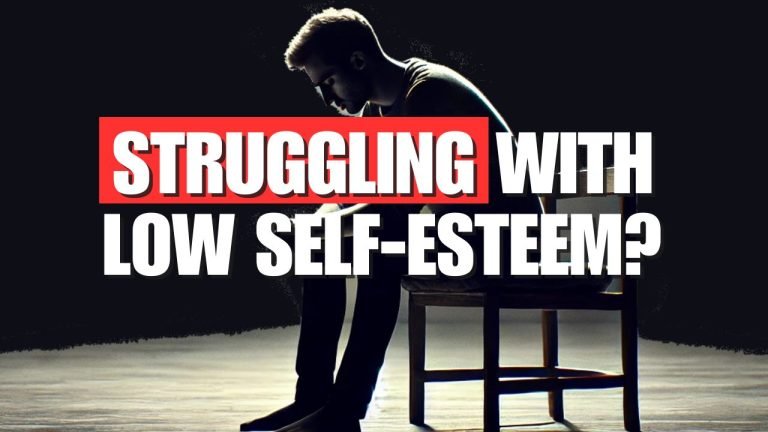
The signs of low self-esteem in men are not always as obvious as saying, “I don’t like myself.” They can appear as constant self-criticism, difficulty accepting compliments, fear of rejection, procrastination, perfectionism, overworking, jealousy, people-pleasing, defensiveness, or repeatedly avoiding situations in which failure might feel personally threatening.
That is one reason low self-esteem can be difficult to recognize in men. Some of the behaviors surrounding it can easily be mistaken for personality traits. A man who works constantly may look ambitious. A man who refuses help may look independent. A man who rarely speaks about his feelings may appear naturally private. Someone who avoids opportunities may simply describe himself as cautious. In some cases, those descriptions may be completely accurate. In others, the behavior may be protecting a much more negative belief about himself.
It is important not to diagnose somebody based on a checklist. No single behavior proves that a man has low self-esteem, and many of the signs discussed here can also occur with depression, anxiety, trauma, chronic stress, relationship difficulties, substance use, or other mental-health concerns. The more useful question is whether a persistent pattern exists in which a man sees himself as inadequate, unworthy, incapable, or fundamentally less valuable than other people.
Low self-esteem is also different from occasionally feeling insecure. Everyone has periods of self-doubt. The concern is when negative beliefs about yourself become broad, persistent, and influential enough that they begin shaping the opportunities you pursue, the relationships you tolerate, the risks you avoid, and the way you interpret both success and failure.
- The signs of low self-esteem in men can include chronic self-criticism, difficulty accepting praise, comparison with other men, fear of rejection, avoidance, perfectionism, overwork, reassurance-seeking, jealousy, and trouble setting boundaries.
- Low self-esteem does not look the same in every man. Some men become withdrawn while others compensate through achievement, status, fitness, competitiveness, or external validation.
- Self-esteem is not the same as confidence. A man can be highly confident in a particular skill while still holding a negative overall view of his own worth.
- Low self-esteem can affect relationships, decision-making, emotional health, and willingness to pursue meaningful opportunities.
- Self-esteem can change. Evidence-based approaches often focus on challenging negative beliefs, modifying unhelpful assumptions, recognizing positive qualities, and gradually behaving in ways that contradict an entrenched negative self-view.
- What Is Self-Esteem?
- Self-Esteem vs. Self-Confidence
- 12 Signs of Low Self-Esteem in Men
- What Causes Low Self-Esteem in Men?
- How Low Self-Esteem Affects Relationships
- How Low Self-Esteem Can Affect Work and Success
- Low Self-Esteem and Mental Health
- How Men Can Build Healthier Self-Esteem
- If You See These Signs in Someone You Care About
- When Professional Help Makes Sense
- Frequently Asked Questions About Low Self-Esteem in Men

What Is Self-Esteem?
Self-esteem is your overall evaluation of yourself—how positively or negatively you view your own qualities, abilities, accomplishments, character, and worth. The American Psychological Association’s definition of self-esteem describes it as the degree to which the qualities within a person’s self-concept are perceived positively. That includes how a person evaluates his abilities and accomplishments as well as whether he sees himself as living according to his values.
A useful clinical description comes from the Centre for Clinical Interventions, which describes low self-esteem as a generally negative overall opinion of yourself. The problem is not simply noticing weaknesses. Everyone has weaknesses. Low self-esteem becomes more significant when negative conclusions such as “I’m not good enough,” “I’m a failure,” or “There is something wrong with me” begin to function as facts rather than opinions that can be questioned.
This distinction helps explain why low self-esteem can be so persistent. Once a man has developed a broad negative belief about himself, he may begin interpreting experiences through that belief. A rejection confirms that he is undesirable. A mistake confirms that he is incompetent. Someone else’s success becomes evidence that he is behind. Even praise can be dismissed because it conflicts with what he already believes about himself.
Success does not always solve the problem. Research on low self-esteem and the formation of global self-performance beliefs found differences in how people with lower self-esteem formed broader judgments about their performance. One implication is that objective achievement and subjective self-evaluation are not always the same thing. A man can accomplish something meaningful and still struggle to incorporate that success into the way he sees himself.
That is why building healthier self-esteem is not simply a matter of telling yourself that you are great. It involves developing a more balanced and accurate view of yourself—one that can acknowledge weaknesses without turning them into a verdict on your value as a person.
Self-Esteem vs. Self-Confidence: They Are Not the Same Thing
Self-esteem and self-confidence overlap, but they are not interchangeable. Confidence generally refers to your belief that you can perform successfully in a particular situation. Self-esteem is broader and concerns how you evaluate yourself as a person.
A man can therefore have high confidence and low self-esteem at the same time. He may be excellent at his job, comfortable leading a meeting, physically fit, financially successful, or highly skilled in a particular field while privately believing that he is unlovable, inadequate, or never quite good enough.
This matters because some signs of low self-esteem in men can be hidden behind obvious competence. Achievement may even become one of the ways a man tries to manage his insecurity. If his sense of worth depends heavily on status, income, appearance, fitness, professional success, or other people’s approval, he may continue chasing achievement without ever feeling that he has finally become enough.
The APA describes these as contingencies of self-worth: areas in which people invest their self-esteem so heavily that feedback within those domains strongly affects how they see themselves. For one man, professional success may carry enormous weight. For another, physical appearance, sexual desirability, popularity, or being perceived as competent may become the standard against which almost everything else is measured.
There is nothing wrong with wanting success, fitness, financial stability, respect, or a good relationship. The problem begins when success in one of those areas becomes the condition a man believes he must satisfy before he is allowed to consider himself worthwhile.
12 Signs of Low Self-Esteem in Men
The following signs of low self-esteem in men should be understood as patterns to notice rather than diagnostic criteria. One sign by itself means very little. What matters more is whether several behaviors repeatedly appear together and are connected to a persistently negative view of oneself.
1. Constant Self-Criticism
One of the clearest signs is an internal dialogue that is consistently harsher than the way the man would speak to almost anyone else. He may describe himself as stupid, weak, unattractive, unsuccessful, unworthy, or fundamentally behind everyone around him.
There is a difference between healthy self-evaluation and habitual self-attack. A man with healthy self-esteem can recognize a mistake and think, “I handled that badly.” Low self-esteem is more likely to turn the same event into, “I always screw everything up,” or “This proves I’m a failure.”
The first statement evaluates behavior. The second turns the behavior into an identity.
Clinical models of negative self-evaluations and low self-esteem emphasize this tendency to transform individual experiences into broad judgments about personal worth. Over time, those judgments can become so familiar that a man stops recognizing them as interpretations at all.
2. Difficulty Accepting Compliments
A man with low self-esteem may have difficulty allowing positive information about himself to register. Someone tells him he did excellent work, and he immediately points out what could have been better. His partner tells him he looks good, and he assumes she is being nice. Someone praises his success, and he attributes everything to luck.
Humility is not the same thing as being unable to accept positive feedback. Healthy humility allows someone to say thank you without believing he is superior to everyone else. Repeatedly invalidating every compliment can indicate that positive information simply does not fit the man’s existing view of himself.
This helps explain why reassurance alone may have limited effects. If a person fundamentally believes he is inadequate, praise can be interpreted as inaccurate rather than corrective.
3. Constant Comparison With Other Men
Comparison becomes a problem when virtually every encounter turns into a ranking exercise. Another man’s income, career, physique, marriage, house, confidence, social life, or status becomes evidence of where he himself has fallen short.
Social comparison is normal. The more concerning pattern is when comparison is consistently upward and self-punishing. Instead of using another person’s success as information or inspiration, the man experiences it as an indictment of his own value.
Modern life offers an almost unlimited supply of comparison material. Social media can expose someone to carefully selected images of other people’s careers, bodies, relationships, homes, vacations, and achievements throughout the day. If a man’s self-worth is already unstable, those comparisons can become another way of confirming what he fears about himself.
4. Avoiding Challenges Because Failure Feels Too Personal
One of the less obvious signs of low self-esteem in men is avoidance. A man may procrastinate, refuse opportunities, stay in work that no longer fits, avoid dating, postpone difficult conversations, or abandon goals before he has seriously attempted them.
The behavior can look like laziness or lack of ambition, but sometimes the underlying calculation is different. If trying and failing would confirm a deeply negative belief about himself, avoiding the test altogether can feel psychologically safer.
This creates a difficult cycle. Avoidance protects the man from immediate failure but also prevents him from collecting evidence that he may be more capable than he believes. Over time, the opportunities he does not pursue can reinforce the belief that he is incapable of moving forward.
Research on low self-esteem, achievement, and related behavior in medical students found associations between self-esteem and academic functioning. That population is not equivalent to adult men generally, but it illustrates the broader connection between how people evaluate themselves and how they approach performance.
5. Perfectionism and Overworking
Low self-esteem does not always make a man withdraw. Sometimes it produces the opposite response: relentless achievement.
A man may become highly productive because achievement temporarily protects him from feeling inadequate. He works longer, trains harder, earns more, collects credentials, or constantly raises the standard he has to meet before he can relax.
The important distinction is not whether he works hard. Ambition can be healthy. The question is what happens psychologically when he falls short. If one failed project, missed workout, professional setback, or criticism causes his entire sense of worth to collapse, achievement may be carrying more emotional weight than it appears.
This can make success strangely unsatisfying. The finish line moves. The promotion that was supposed to prove something feels good for two weeks, after which another target becomes necessary. He is not only trying to accomplish something; he is repeatedly trying to earn the right to feel acceptable.
6. Needing Constant External Validation
Another possible sign is depending heavily on other people’s reactions to determine how you feel about yourself. The man may need repeated reassurance from a partner, attention from potential romantic interests, compliments about his appearance, praise at work, social-media engagement, or visible evidence that other people consider him successful.
Everyone appreciates approval. External validation becomes problematic when emotional stability depends on it. If praise immediately improves a man’s sense of worth while criticism or indifference destroys it, his view of himself may be largely outsourced to the people around him.
This can create exhausting relationship dynamics because no amount of reassurance feels permanent. The partner can say, “I love you,” but the underlying belief remains unchanged, so the question eventually returns in another form.
7. Fear of Rejection or Abandonment
A man who believes he is fundamentally less valuable may have difficulty trusting that another person genuinely wants him. He may worry excessively about being replaced, interpret distance as rejection, or assume that a partner will eventually realize she could do better.
This fear can produce very different behaviors. One man becomes clingy and repeatedly seeks reassurance. Another avoids closeness because rejection would hurt too much. Another ends relationships first so that he never has to experience someone else leaving him.
These patterns are discussed in practical descriptions of low self-esteem, reassurance-seeking, and relationship insecurity. That article is not clinical research, but the behaviors described align with broader models in which negative beliefs about the self shape expectations about how other people will respond.
8. Difficulty Setting Boundaries
Some men with low self-esteem become habitual people-pleasers. They agree when they want to say no, tolerate disrespect to avoid conflict, take on more than they can reasonably handle, or repeatedly prioritize other people’s needs because asserting their own feels selfish or risky.
This can be mistaken for kindness. Genuine generosity and chronic self-erasure are not the same thing.
A healthy boundary communicates that your needs, time, values, and limits have legitimate weight. If a man believes his needs matter less than everyone else’s, boundary-setting can feel dangerous because he fears that asserting himself will produce rejection.
The opposite behavior can also occur. Some men become rigid, defensive, or controlling when they feel threatened. Low self-esteem does not excuse those behaviors, but insecurity can sometimes help explain why ordinary disagreement feels like an attack on identity.
9. Defensiveness Around Criticism
Criticism can feel unusually threatening when someone’s self-worth is already fragile. A relatively small correction may be experienced not as information about one behavior but as confirmation that he is fundamentally inadequate.
The response may be anger, withdrawal, blaming, counterattacking, or immediately producing reasons why the criticism is unfair. Again, the issue is not that every criticism deserves agreement. Sometimes criticism really is inaccurate or malicious.
The pattern worth noticing is whether almost all corrective feedback creates a disproportionate threat. A man with healthier self-esteem has more room to consider criticism because acknowledging one weakness does not require concluding that everything about him is defective.
10. Jealousy and Relationship Insecurity
Jealousy can have many causes, and it should not automatically be attributed to low self-esteem. However, persistent insecurity can contribute when a man sees himself as easily replaceable or fundamentally less desirable than other men.
He may feel threatened by his partner’s friendships, independence, career success, or attention from other people. He may compare himself with previous partners or require repeated reassurance that the relationship is secure.
It is important to draw a firm line here. Low self-esteem may help explain insecurity, but it does not excuse controlling behavior, intimidation, manipulation, threats, insults, stalking, infidelity, or abuse. A partner is not responsible for managing another adult’s self-esteem at the expense of her own safety or autonomy.
11. Trouble Giving Himself Credit for Success
Another of the common signs of low self-esteem in men is a tendency to explain success away while treating failure as deeply personal.
The promotion happened because the competition was weak. The client liked the presentation because expectations were low. The relationship is going well because his partner is unusually patient. He got into shape because he has decent genetics.
Yet when something goes badly, the explanation changes. Failure becomes evidence of a personal defect.
This creates an unfair internal accounting system in which successes do not count but failures always do. Over time, that pattern can preserve low self-esteem even when the man’s actual life contains substantial evidence of competence.
The research on self-esteem and global self-performance estimates is relevant here because it examines how people integrate performance information into broader judgments of themselves. Self-evaluation is not simply a perfect reflection of objective performance.
12. Using Distraction or Unhealthy Coping to Avoid Himself
Low self-esteem can become uncomfortable enough that a man looks for ways to avoid thinking about himself. That may involve constant work, alcohol or drugs, compulsive gaming, pornography, social media, casual sex, spending, or simply keeping every hour occupied.
None of these behaviors automatically indicates low self-esteem. The question is whether the activity has become a way of avoiding thoughts, feelings, decisions, or relationships that are painful to confront.
Sometimes the man does not appear unhappy because he rarely gives himself enough silence to notice how he feels.
If substance use is becoming difficult to control, causing harm, or functioning as the primary way someone manages distress, that deserves its own appropriate professional assessment rather than being reduced to a self-esteem problem.

What Causes Low Self-Esteem in Men?
There is no single cause of low self-esteem. A man’s view of himself develops over time through relationships, experiences, successes and failures, cultural expectations, feedback from other people, and the conclusions he draws from those experiences.
The Centre for Clinical Interventions describes how negative life experiences can contribute to negative core beliefs. Experiences such as persistent criticism, bullying, abuse, neglect, rejection, family conflict, difficulty meeting expectations, or repeated experiences of failure can contribute to broad beliefs about being inadequate or unworthy.
The experience itself is only part of the story. Two people can encounter similar setbacks and develop very different conclusions about themselves. What often matters is the meaning attached to the event. A child who repeatedly struggles academically might conclude, “School is difficult for me,” or he might conclude, “I’m stupid.” One describes an area of difficulty. The other becomes a global judgment about identity.
Childhood Criticism and Conditional Approval
If affection, praise, or attention seemed available only when a boy performed well, stayed quiet, won, looked strong, or met other people’s expectations, he may learn that worth has to be earned continuously.
That can carry into adulthood as perfectionism, people-pleasing, workaholism, or a fear that mistakes will expose something fundamentally inadequate about him.
Bullying, Rejection, and Social Exclusion
Experiences of humiliation, bullying, romantic rejection, exclusion, or being treated as different can also affect the way a person sees himself. This is especially important when the experience becomes linked to an enduring part of identity.
For example, a systematic review and meta-analysis examining sexual orientation differences in self-esteem among men and women found disparities in self-esteem associated with sexual minority status. That does not mean sexual orientation itself causes low self-esteem; rather, social stigma, discrimination, acceptance, and identity-related experiences can affect psychological well-being.
More recent research has likewise examined how family acceptance and self-esteem can interact with psychological distress among men who have sex with men. These findings reinforce a broader point: self-esteem develops within a social environment, not in isolation from it.
Failure and Setbacks That Become Identity
Failing at something does not automatically cause low self-esteem. The problem is when an event becomes a permanent definition of the self. Losing a job becomes “I am a failure.” A divorce becomes “I am unlovable.” A business loss becomes “I cannot trust my judgment.”
Healthy self-esteem allows enough separation between behavior and identity to learn from an experience without allowing one outcome to define the entire person.
Masculine Expectations and Measuring Worth
Some men also connect self-worth strongly to culturally masculine markers such as income, sexual success, professional status, physical strength, stoicism, or the ability to solve problems without help. None of those characteristics is inherently unhealthy. Problems arise when a man concludes that failing to meet one standard makes him less worthy as a person.
Research involving men living with prostate cancer has examined masculine self-esteem, stoicism, psychological flexibility, distress, and quality of life. The study involved a specific medical population and should not be generalized to all men, but it illustrates how beliefs connected to masculine identity can interact with psychological adjustment during difficult circumstances.
A healthy model of masculinity should leave room for competence, strength, responsibility, vulnerability, uncertainty, help-seeking, and failure without making a man’s basic worth dependent on never struggling.
How Low Self-Esteem Affects Men’s Relationships
Low self-esteem can affect relationships because the way you see yourself influences how you interpret another person’s behavior. If you already believe you are unworthy of love, ordinary relationship uncertainty can feel like proof that abandonment is coming.
A delayed text may be interpreted as rejection. A disagreement can feel like evidence that the relationship is collapsing. A partner’s independence may feel threatening because the man privately doubts why she would continue choosing him if she has other options.
This can lead to reassurance-seeking, jealousy, withdrawal, people-pleasing, defensiveness, or self-sabotage. Some men push a partner away before she has the chance to leave. Others stay in unhealthy relationships because they doubt they deserve anything better. This is closely connected to isolation more broadly — men who lack a strong circle of male friendships often place all of their emotional weight on a single relationship, which can make ordinary relationship stress feel far more threatening. If building real friendships with other men feels difficult, that isolation can quietly reinforce the same insecurities showing up in a romantic relationship.
If this pattern is affecting your relationship, read how low self-esteem can damage relationships for a more focused discussion of that dynamic.
There is an equally important point for partners: understanding someone’s insecurity does not create an obligation to tolerate harmful behavior. Low self-esteem does not excuse control, insults, manipulation, threats, chronic dishonesty, coercion, or abuse. You can have compassion for the insecurity underneath a behavior while still holding the person responsible for the behavior itself.
How Low Self-Esteem Can Affect Work, Ambition, and Success
The relationship between low self-esteem and achievement can move in opposite directions. Some men avoid opportunities because failure feels dangerous. Others become highly achievement-oriented because success has become the primary way they prove their worth.
The first man may repeatedly underestimate himself. He does not apply for the promotion because he assumes somebody else is more qualified. He stays silent in meetings even when he has something useful to contribute. He never launches the project because criticism would feel too personal. That same underestimation often shows up when a man is weighing a career change later in life — the fear is rarely about the work itself, but about what failing at something new might confirm about his own worth.
The second man may appear extremely confident from the outside. He works sixty hours a week, pursues another credential, trains relentlessly, and keeps moving the professional target. Yet his success rarely creates durable satisfaction because achievement is being used to answer a question it cannot permanently answer: “Am I finally good enough?”
Both patterns can come from the same underlying difficulty—placing too much of one’s worth on performance.
This is one reason it helps to separate self-esteem from competence. Improving your skills is worthwhile. Working hard is worthwhile. Pursuing meaningful ambition is worthwhile. Healthy self-esteem does not require abandoning standards. It allows you to have standards without treating every outcome as a referendum on your worth.
Low Self-Esteem and Mental Health
Low self-esteem is not itself proof of a mental-health disorder, but research has found important associations between self-esteem and psychological difficulties.
For example, longitudinal research examining reciprocal relationships between self-esteem, coping styles, and anxiety symptoms found meaningful relationships among those factors in adolescents. Because the study involved adolescents, it should not be used as direct evidence about adult men, but it supports the broader understanding that self-esteem and emotional difficulties can influence one another over time.
A meta-analysis of longitudinal studies likewise found a relationship between low self-esteem and eating-related problems. Again, that research is broader than adult male populations specifically, but it demonstrates why self-esteem should not always be treated as a superficial confidence issue.
Research in other populations has also linked self-esteem with depression, anxiety, psychological distress, and quality of life. The direction of those relationships can be complex. Low self-esteem may contribute to emotional difficulties, mental-health problems may damage self-esteem, or both processes may reinforce one another.
This is why persistent hopelessness, severe withdrawal, significant substance use, major changes in functioning, or thoughts about death or self-harm should not be treated as something that simply needs a confidence boost.
If there is immediate danger or someone is thinking about suicide or self-harm, seek emergency or crisis support where that person is located. Life coaching is not a substitute for emergency care, psychiatric treatment, or psychotherapy when those services are needed.

How Men Can Build Healthier Self-Esteem
Low self-esteem is not necessarily permanent. A long-standing negative view of yourself can feel like a description of reality because you have repeated it internally for years, but beliefs about yourself can be examined and changed.
Evidence-based approaches do not usually depend on simply repeating positive affirmations until you believe them. Structured cognitive-behavioral approaches to improving low self-esteem focus instead on understanding how negative beliefs developed, identifying biased expectations and negative self-evaluations, acknowledging positive qualities, adjusting unhelpful rules and assumptions, and developing more balanced core beliefs.
That process is less dramatic than deciding overnight that you are confident. It is also more credible.
1. Learn to Recognize the Voice You Have Mistaken for Truth
Start paying attention to the statements that appear automatically when something goes wrong. “I’m an idiot.” “Nobody wants me.” “I’ll screw this up.” “People like him are better than me.”
Do not immediately replace them with exaggerated statements you do not believe. Begin by questioning whether the original conclusion is accurate, complete, and fair.
Instead of “I’m a failure,” a more balanced statement might be, “That did not work, and I need to understand why.” Instead of “Nobody respects me,” you might ask which specific relationship created that feeling and whether the conclusion truly applies to everyone.
The goal is accuracy, not artificial positivity.
2. Stop Turning Mistakes Into Identity
Failure contains useful information when it remains attached to the behavior. Once it becomes identity, learning gets much harder.
“I handled that conversation badly” gives you something you can improve. “I’m terrible at relationships” converts one event into a permanent conclusion.
Develop the habit of evaluating actions specifically rather than evaluating yourself globally. This is a core part of what men build through accountability coaching — learning to separate what you did from who you are, without using either one as an excuse to avoid change.
3. Take Manageable Actions That Contradict the Negative Belief
If you believe you are incapable, waiting to feel capable before acting can preserve the belief indefinitely. Instead, choose actions small enough to complete but meaningful enough to provide evidence.
Apply for the position. Go to the event. Have the conversation. Complete the workout. Learn the skill. Ask the question. Finish one part of the project.
The purpose is not to guarantee success. It is to stop allowing the negative belief to make every decision before reality has a chance to test it.
4. Build Self-Trust by Keeping Realistic Commitments
Confidence grows more reliably from evidence than from declarations. If you repeatedly tell yourself you will do something and repeatedly do not, your own promises begin losing credibility.
Start smaller. Make commitments you can realistically keep and follow through on them. If you say you will walk for twenty minutes, walk for twenty minutes. If you say you will make the appointment Tuesday, make it Tuesday.
This is not because perfect discipline determines human worth. It is because repeated follow-through gives you evidence that your decisions can be trusted.
5. Practice Accepting Positive Information
When someone gives you a sincere compliment, notice the urge to dismiss it. You do not have to transform the compliment into proof that you are exceptional. Simply allow it to count as information.
The same applies to accomplishments. Record what went well without immediately qualifying it. This can feel surprisingly uncomfortable for people who have spent years maintaining a negative picture of themselves.
6. Build Boundaries Rather Than Trying to Earn Acceptance
Learning to say no can be part of building healthier self-esteem because it reinforces the idea that your time, values, and needs deserve consideration.
A boundary does not guarantee that everybody will like you. That is part of why boundaries matter. Healthy self-esteem makes room for the possibility that someone can be disappointed with you without that disappointment becoming proof that you are a bad person.
7. Pay Attention to the People and Environments Around You
Relationships can reinforce either a balanced self-concept or a relentlessly negative one. This does not mean surrounding yourself only with people who agree with you or avoiding all criticism. Healthy relationships include honest feedback.
The difference is whether the people around you fundamentally respect you and want you to grow, or whether humiliation, contempt, manipulation, and constant diminishment have become normal.
Supportive relationships cannot manufacture self-esteem for you, but they can make it easier to develop a more accurate view of yourself. For a lot of men, that starts with rebuilding real, in-person friendships with other men instead of carrying everything alone.
Free Resource: Brotherhood Bonds
If part of building healthier self-esteem means surrounding yourself with men who challenge and support you instead of going it alone, start with Brotherhood Bonds — a free guide from STRONG Men Coaching on building genuine male friendship.
8. Exercise and Physical Health Can Help, but Appearance Should Not Become Your Worth
Physical activity can contribute to well-being and a sense of competence. Research in older adults has found relationships among regular exercise, self-esteem, self-efficacy, and life satisfaction. That population differs from adult men generally, so the finding should not be overgeneralized, but it supports the value of health behavior as one part of broader well-being.
There is an important caution. Improving fitness can strengthen confidence, but replacing low self-esteem with an obsession about body composition does not necessarily solve the underlying problem. Your physical health matters. Your value cannot safely depend on maintaining a particular body at all times.
9. Get Appropriate Professional Support When the Pattern Is Deeply Rooted
Some beliefs are difficult to untangle alone, particularly when they are connected to trauma, depression, anxiety, abuse, eating disorders, or long-standing relationship patterns.
Cognitive-behavioral interventions specifically targeting low self-esteem have been studied. For example, a randomized pilot study evaluating internet-based cognitive behavioral therapy for low self-esteem found promising results in adolescents. That study does not establish effectiveness for all adult men, but it demonstrates that low self-esteem is something clinicians can address systematically rather than merely telling people to “be more confident.”
If what you are experiencing involves significant psychological distress or a mental-health condition, a licensed mental-health professional is the appropriate place to start.

If You See Signs of Low Self-Esteem in a Man You Care About
Recognizing the signs of low self-esteem in men can be especially difficult when you are looking at someone you care about. You may see his abilities more clearly than he does and wonder why reassurance never seems to settle the issue.
The temptation is to try to convince him that his negative beliefs are wrong. Reassurance can be supportive, but you cannot permanently lend someone else your view of his worth. If he fundamentally believes something negative about himself, the belief usually needs to be examined and changed from his side.
You can be supportive without becoming responsible for fixing him. Listen without constantly arguing with every insecure statement. Encourage specific actions rather than endless reassurance. Suggest appropriate professional help if the problem is significantly affecting his life.
Most importantly, do not allow an explanation based on low self-esteem to become an excuse for harmful behavior. Jealousy does not justify surveillance. Fear of abandonment does not justify manipulation. Insecurity does not justify insults, threats, controlling behavior, or abuse.
Compassion and boundaries can exist at the same time.
When Low Self-Esteem May Need More Than Coaching
STRONG Men Coaching works with men on goals, confidence, accountability, relationships, career direction, personal structure, and making changes in everyday life. Coaching can be useful when a man is generally functioning but needs help translating insight into decisions and action.
Anthony is a life coach, not a licensed therapist, and coaching does not diagnose or treat mental-health disorders.
If low self-esteem is accompanied by significant depression, anxiety, trauma symptoms, an eating disorder, uncontrolled substance use, severe hopelessness, self-harm, suicidal thinking, or another clinical mental-health concern, working with an appropriate licensed professional is important.
There is no conflict between taking responsibility for your life and getting professional help. Sometimes getting the right help is the responsible decision.
Ready to Build Real Confidence, Not Just Cope With Its Absence?
If you are generally functioning but know that self-doubt, avoidance, lack of confidence, or repeated failure to follow through is holding you back, a coaching conversation can help you get honest about what is actually driving it and build a practical plan to change it.
Frequently Asked Questions About the Signs of Low Self-Esteem in Men
What are the most common signs of low self-esteem in men?
Common signs of low self-esteem in men can include persistent self-criticism, difficulty accepting compliments, comparison with other men, avoidance of challenges, perfectionism, overworking, excessive need for validation, fear of rejection, difficulty setting boundaries, defensiveness, jealousy, and trouble giving themselves credit for success.
No individual sign proves that someone has low self-esteem. The pattern, persistence, context, and underlying beliefs matter more than any one behavior.
How does a man with low self-esteem behave in a relationship?
A man with low self-esteem may seek frequent reassurance, become fearful of rejection, struggle to trust affection, tolerate unhealthy relationships, avoid conflict, become jealous, withdraw emotionally, or push a partner away before she has the opportunity to reject him.
These behaviors can have other causes as well. Low self-esteem should never be used to excuse controlling, manipulative, threatening, or abusive behavior.
Can a successful man have low self-esteem?
Yes. Professional success, income, intelligence, fitness, popularity, or leadership ability do not automatically produce healthy self-esteem.
A successful man may remain highly self-critical or make his worth dependent on continual achievement. The APA concept of contingencies of self-worth helps explain how self-esteem can become heavily invested in areas such as professional success, appearance, or social approval.
Can low self-esteem make a man angry or defensive?
It can contribute, particularly when criticism or disagreement is experienced as a threat to an already fragile sense of worth. However, anger and defensiveness have many possible causes, so they should not automatically be interpreted as signs of low self-esteem.
Does low self-esteem cause jealousy?
Low self-esteem can contribute to jealousy if a man sees himself as less desirable or easily replaceable, but jealousy can have many causes. Persistent jealousy should be evaluated in the context of the individual and the relationship rather than attributed to a single psychological factor.
Is procrastination a sign of low self-esteem in men?
It can be. A man may delay a task or opportunity when failure would seem to confirm a negative belief about his ability or worth. Procrastination also has many other causes, including poor planning, stress, ADHD, anxiety, depression, lack of interest, and competing demands.
Is perfectionism a sign of low self-esteem?
Sometimes. Perfectionism can become a way of protecting self-worth when a person believes that mistakes make him inadequate or unacceptable. Other people pursue high standards without holding a globally negative view of themselves, so perfectionism by itself is not proof of low self-esteem.
What causes low self-esteem in men?
Low self-esteem can develop through many pathways, including persistent criticism, rejection, bullying, abuse, neglect, difficult family environments, failure experiences, conditional approval, discrimination, relationship experiences, and rigid expectations about success or masculinity.
The clinical model of how low self-esteem develops emphasizes the role of negative life experiences, core beliefs, and unhelpful assumptions that can continue influencing behavior long after the original circumstances have changed.
What is the difference between low self-esteem and low confidence?
Confidence generally concerns your belief in your ability to perform a particular task, while self-esteem involves your broader evaluation of yourself as a person.
A man can therefore be confident at work, in sports, or socially while still struggling with low self-esteem.
Can low self-esteem lead to depression or anxiety?
Self-esteem and emotional difficulties are associated, but the relationship is not simple enough to say that low self-esteem always causes depression or anxiety. Research has found reciprocal relationships between self-esteem, coping, and anxiety symptoms in adolescent populations, while other research connects low self-esteem with different forms of psychological distress.
Persistent depression or anxiety deserves appropriate assessment rather than assuming self-esteem is the sole cause.
Can low self-esteem be fixed?
Self-esteem can change. Evidence-based approaches commonly address negative core beliefs, biased expectations, self-critical thinking, avoidance, unhelpful personal rules, and difficulty acknowledging positive qualities.
Change usually comes from repeated new ways of thinking and behaving rather than a single motivational breakthrough.
How can a man improve his self-esteem?
Useful steps can include identifying persistent negative beliefs, challenging overly broad self-judgments, setting realistic goals, following through on manageable commitments, accepting positive feedback, establishing healthier boundaries, taking actions that test negative assumptions, improving supportive relationships, and seeking professional help when necessary.
Can exercise improve self-esteem in men?
Physical activity can support well-being and a sense of competence, and research has found associations between exercise, self-esteem, self-efficacy, and life satisfaction in older adults. Exercise should be viewed as one potentially useful part of a broader approach rather than a guaranteed treatment for low self-esteem.
How do you help a man with low self-esteem?
You can listen, encourage realistic action, acknowledge genuine strengths, avoid reinforcing harsh self-criticism, and encourage appropriate professional support. You cannot build another adult’s self-esteem for him, and you do not have to tolerate harmful behavior because insecurity may be contributing to it.
Low Self-Esteem Does Not Have to Become an Identity
The most important thing to understand about the signs of low self-esteem in men is that they are not necessarily fixed personality traits. A man who avoids challenges today is not destined to spend the rest of his life avoiding them. Someone who has spent years criticizing himself can learn to evaluate himself more accurately. A man who depends heavily on other people’s approval can gradually develop a more stable internal standard.
That change usually does not happen because someone finally says the perfect motivational phrase. Long-standing beliefs are more likely to shift through repeated experiences that contradict them, more balanced thinking, healthier relationships, appropriate professional support, and actions that provide new evidence about what a man is capable of handling.
The goal is not arrogance. Healthy self-esteem does not require believing you are better than everyone else, pretending you have no weaknesses, or refusing criticism. In fact, healthier self-esteem can make honest self-evaluation easier because one mistake no longer threatens your entire identity.
You can acknowledge that you failed without deciding you are a failure. You can admit that somebody rejected you without deciding you are unlovable. You can see another man’s success without turning it into proof that your own life has less value. You can recognize a weakness without allowing that weakness to become the definition of who you are.
That is ultimately the difference between healthy self-esteem and simply trying to feel good about yourself. Healthy self-esteem gives you enough stability to see yourself honestly, take responsibility for what needs to change, and continue moving forward without making every setback a verdict on your worth.
Take the Next Step Toward Real Confidence
If self-doubt, avoidance, or low confidence is affecting the way you work, relate to other people, or make decisions, a conversation with a coach can help you build a plan around it. If the problem involves significant depression, anxiety, trauma, substance use, self-harm, or another mental-health condition, seek support from an appropriately qualified mental-health professional first.